Multiple regression is a statistical workhorse of the social sciences. This three-day short course is designed for participants who want to strengthen their understanding of regression analysis and apply it confidently in academic research.
Instructor
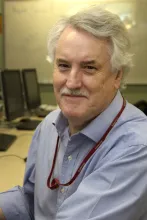
David John Gow is a consultant in research methods and statistics and their application in the social sciences. He has taught in many ACSPRI Summer and Winter Programs

Multiple regression is a statistical workhorse of the social sciences. This three-day short course is designed for participants who want to strengthen their understanding of regression analysis and apply it confidently in academic research.
Learning Outcomes
- Read and critically evaluate academic articles that use regression analysis.
- Use regression analysis to analyse data and draw reliable, valid conclusions.
- Write up regression results in a form that meets academic journal standards.
The course is based on learning by doing. Participants will complete a series of practical exercises designed to reinforce key concepts through hands-on data analysis using statistical software.
There is no required course software.
Participants may use the statistical package they prefer. The course notes support users of SPSS, Stata and R.
Day 1: Foundations of Multiple Regression
- Bivariate and multiple regression for prediction and hypothesis testing
- Assumptions of multiple regression and Interpreting the outputs
- Multiple regression with non-interval variables, including ordinal, categorical and dummy variables
Day 2: Diagnostics and Model Building
- Elementary non-linear (“curvilinear”) regression
- Regression diagnostics, including multicollinearity, outliers and residual analysis, including treatment for missing values
- Model-building strategies that combine theory with data analysis
Day 3: Advanced Applications and Communications
- Variable transformations and interactions
- Advanced applied regression topic to be confirmed
- Writing up regression analysis for presentations, theses and academic journals
This course will be run over 5 days in three sessions per day:
- 10.00 am - 11.30 am - Session 1
- 11.50 am - 1.20 pm - Session 2
- 2.00 pm - 3.30 pm - Session 3
Please note: This course will run on Australian Eastern Daylight Time (UTC+11)
Participants should understand basic descriptive statistics and have some experience with a statistical software package. More specifically, they should have:
(a) completed an introductory statistics course, such as Fundamentals of Statistics, or have knowledge of basic descriptive statistics (central tendency, dispersion, Z-scores), bivariate analysis (crosstabs and/or bivariate correlations) and familiarity with the principles of null-hypothesis significance testing and “P-values”.
(b) experience with a statistical package (such as SPSS, Stata, or R) sufficient to read or import data, obtain descriptive statistics and frequencies, recode variables and compute (“generate”) new variables.
Nearly all good social statistics texts treat regression analysis and thus constitute suitable reference material.
One readable text is Timothy Z. Keith, Multiple Regression and Beyond, either the first or second editions.
The instructor's course notes will serve as the course texts.
You will have a choice of a digital copy (pdf), or hard copy which will be express-posted to your nominated 'shipping address' in advance.
I found the workshop extremely valuable. I am now confident in reading the results of regression analysis and knowing when to perform the tests. David is extremely knowledgeable and presented all of the information in ways I could understand.
Would thoroughly recommend the course.
It was incredibly helpful and very well explained - using a variety of methods which helped to properly learn the information and cater to different learning styles
Will help me read & understand research. On my may to being able to conduct my research
To be honest it opened my mind to contain things that will help throughout my research
David was excellent. Honestly, I have had many stats teachers in the past and David was so clear great communication skills.
Gave me a sense of confidence in the statistical methods, and some helpful tips in the procedures to help in my work
Helps me understand the foundation to build my model and my next phase of study.
David Gow makes learning fun.