This masterclass introduces students to choice models, discusses and contrasts the family of available model structures, and covers both estimation on data and the use of models to produce outputs for policy.
Instructor

Stephane Hess is Professor of Choice Modelling and Director of the Choice Modelling Centre at The University of Leeds (UK). Stephane is a globally recognised leader in choice modelling with interests in behavioural models, travel behaviour, health choices, and decision making. His specific academic contributions include developing advanced choice models and empirical contributions across many fields. He is the editor of the Journal of Choice Modelling (the leading international, interdisciplinary journal in choice modelling), the chair of the International Choice Modelling Conference, and co-developer of Apollo (with David Palma, Leeds, UK), a widely used (open-source) estimation software for choice models.
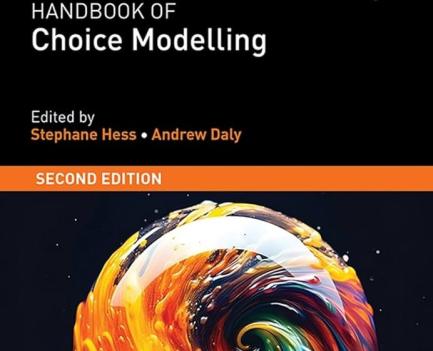
Choice modelling is a specialised area of micro-econometrics that develops and applies mathematical models that represent human decision making. Choice models are used extensively to understand current behaviour and predict future choices in the applied fields of the economic sciences, especially environmental, health, and transport economics. Other application areas include business and marketing. In addition to addressing questions of academic interest, choice modelling informs policy and strategy making in these applied economic disciplines.
This is a lecture-based masterclass taught in six half-day (evening) sessions over two weeks. The course introduces students to the fundamentals of choice modelling through a mix of lectures and discussion sessions covering both theoretical and applied issues.
The masterclass will specifically introduce participants to the family of econometric models that are typically used in choice modelling – both in academic and applied projects. Examples are used throughout the masterclass with application areas including environmental, health, and transport economics.
The masterclass will include a demonstration of the open-source Apollo software for the estimation of choice models. The target audience includes both academic and applied researchers including University researchers and research students, and researchers and policymakers from government agencies and departments.
This 3-day masterclass is taught over six half-day (evening) sessions.
Session 1:
- Introduction to choice modelling;
- Data for choice modelling (revealed and stated preferences);
- Random utility theory;
- The Multinomial logit model (MNL).
Session 2:
- Estimation theory;
- Introduction to Apollo and MNL in Apollo;
- Specification testing;
- Interpretation of MNL results.
Session 3:
- Models allowing for heightened substitution patterns;
- Nested logit;
- Cross-nested logit;
- Estimation in Apollo and forecasting and elasticities.
Session 4:
- Allowing for heterogeneity in preferences;
- Deterministic and random heterogeneity;
- Mixed Logit;
- Latent Class;
- Advanced model estimation in Apollo.
Session 5:
- Other advanced modelling topics;
- Hybrid choice models;
- Departures from the Random Utility framework.
Session 6:
- Choice modelling in practice;
- Joint estimation on RP and SP data;
- Emerging data sources for choice models;
- Pre- and post-estimation tasks in Apollo.
Participants should have some familiarity with linear and logistic regression.
There is no requirement for previous experience in choice modelling.
Hess, Stephane and Andrew Daly (eds.) (2013), Choice Modelling: The State-of-the-Art and the State-of-Practice. Cheltenham, UK; Northampton, MA: Edward Elgar Publishers.
Great balance between teaching the mathematics underlying the models and application using the Apollo package in R.
Exactly as expected - lead by an international expert in the field with comprehensive theoretical and practical knowledge.
I took a choice modelling course many years ago (not with ACSPRI) and this one now was so much more comprehensive and the instructor so much better in explaining the content. The instructor also included new developments, which I hadn't heard of before. So I found the course very useful and could already apply some of the contents in a review of a paper.