Designed for mixed methods and qualitative researchers, this course covers data collection and research design, visualisation and basic analytic methods used in social network research.
Instructor

Dr Dan Chamberlain is a Post-Doctoral Research Translation Officer, with the Victorian Collaborative Centre for Mental Health and Wellbeing. He is an accomplished social network researcher, working on projects in education, health, criminology, sociology, public policy, and network governance, with government, industry, and academic partners.
https://scholar.google.com/citations?hl=en&user=T49dtw0AAAAJ
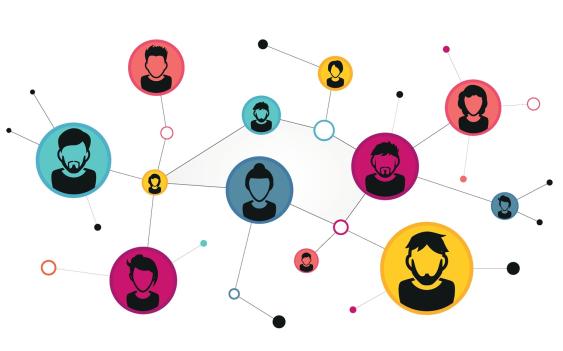
This course is designed for social researchers using qualitative and mixed methods. The course builds from the basic, pioneering methodologies of Social Network Analysis (SNA): survey-based egonet SNA and sociometric, "whole network' SNA, and their extensions to network sensitive ethnographies, community networks, web-based network surveys and research on social media activities. The course reviews the possibilities for working with rich network data from interview or online sources and the unique perspectives that qualitative and social research traditions bring to these tasks. The course explores ways to best manage and explore different kinds of network data in Excel, uses UCINET and NetDraw to produce network diagrams and descriptive statistics. We review other appropriate software related to participants' needs. The course serves as a transition to the associated ACSPRI course 'Big Data Analysis for Social Scientists'.
Network research designs covered in this course are:
- Surveys using ego-centric network (egonet) methods
- Network-sensitive ethnographies
- Sociometric (‘round robin’) ‘whole network’ studies and small group research
- Associational/ Affiliation (‘2-mode’) networks (including ethological studies)
- Cognitive mapping and socio-cognitive mapping (SCM)
For each methodology we consider the best ways to code and manage raw data, the most efficient formats for importing such data into visualisation and analysis software and appropriate measures and statistics for reporting findings. We also discuss the process of relating validated findings to broader research questions (‘meta-inference’), extrapolating them to other settings and associated questions of research design.
Day 1
- Course aims and class introductions;
- Research templates and example datasets;
- Egonet data collection;
- Coding and organizing network data;
- Using NetDraw and UCINET.
Day 2
- Diagrams and data analysis for egonet data;
- Sociometric data and whole network fundamentals;
- Random graph simulations;
- WN data analysis - Cohesion;
- WN data analysis - Centrality;
- Comparing networks.
Day 3
- Working with multiple relations and rich tie data;
- Associational (2-mode) data and analysis;
- (Latent) subgroup detection and in-group/ outgroup modularity;
- Boundaries, hot spots and clusters;
Day 4
- Cognitive Data and socio-cognitive mapping;
- Web-based network surveys and partial sociometric datasets;
- Consultations with instructor
Day 5
Mini-conference: Participants present a short account of the particular project they have worked with through the course.
No prior knowledge of social network analysis is required.
Participants should be comfortable with using spreadsheets (Excel), have some social science background and be familiar with discussions of research methods.
- Scott, J. (2013). Social Network Analysis, SAGE Publications.
- Borgatti, S., M. Everett and J. Johnson (2013), Analyzing Social Networks, SAGE Publications.
- Garry L. Robins, Doing Network Research: Network-based Research Design for Social Scientists (2015), SAGE Publications.
- Borgatti, S. P., M. G. Everett, et al. (2002). Ucinet 6 for Windows: Software for social network analysis. Harvard, Analytic Technologies. Manual; User Guide. www.analytictech.com
The instructor's bound, book length course notes will serve as the course texts.
These will be provided to you on your first day.
Course was extremely useful, very knowledgeable teacher who provided great feedback and allowed for need of participants to drive & complement their teaching.
There was a balance between conceptual understanding procedural skills (software tools) and research design/application. The sequence and balance worked very well.
This course was fundamental to my research design.
This is the complete research method I am using & the course has made it less overwhelming to use.
It was excellent getting the overviews & theoretical info first & then apply this to the real data.
Will provide a methodology that I can use in a current research project.
Course was suitably practical, very valuable much focused on learning a new analysis package.
This has opened a whole new way of thinking about the analysis of my subject matter.
New methods for analysis & presenting complex relationships.