
Fundamentals of Structural Equation Modelling
This course provides an overview of the fundamentals of SEM. As well as the statistical theory, an overview of the many applications and capabilities of SEM is given.
Data Analysis in R
This course will help build participants’ ability to work with data in R and undertake rigorous statistical analysis, including spatial analysis and linear regression, creating publication-standard graphs of the results.
Applied Qualitative Comparative Analysis (QCA)
A course for participants who have experience in qualitative or quantitative research and who are interested in applying QCA in their current or future studies.

Fundamentals of Statistics
A 5-day introductory unit in statistical methods with the emphasis on statistical techniques applicable to the social sciences, although these introductory techniques are also relevant to the health sciences.

Predictive Analytics for Data Science: Linear and Non-Linear Modelling (2-day)
An introduction to linear and non-linear predictive models, providing an interactive step-by-step guide to running these models, and key diagnostics using the R software platform.

Machine Learning for Data Science: Supervised Learning Techniques (3-day)
An introduction to supervised machine learning techniques for data science, providing an interactive step-by-step guide to running some of the standard statistical regression and classification machine learning models that every data scientist should know.
Introduction to Structural Equation Modelling using Stata (2-day)
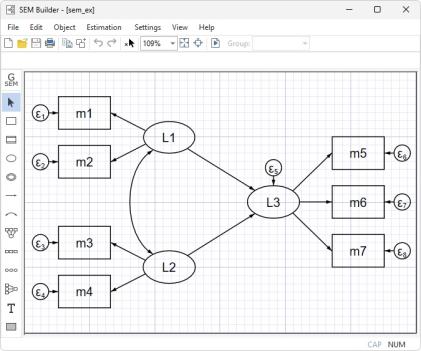
Designed as an applied introduction to SEM using Stata, this course aims to provide participants with a sound understanding of when to use SEM and how to assess and report their models

Foundations of Statistical Analysis in Political Analysis
The aim of this course is to provide students with an accessible introduction to the fundamentals of quantitative political science research.
Introduction to Mixed Effects Modelling (2-day)
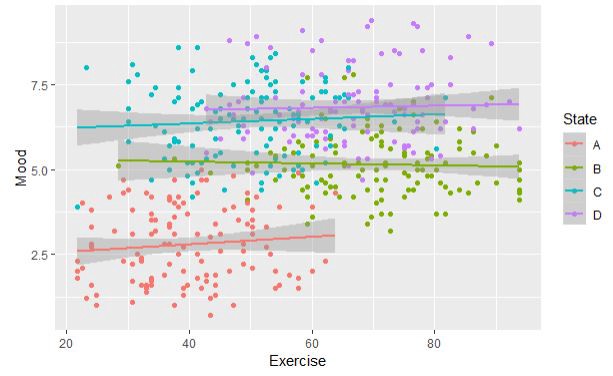
This course is designed as an introduction to mixed effects modelling. These models involve data arising from longitudinal studies or studies where the data exhibits some form of hierarchy, and sometimes referred to as multilevel modelling.
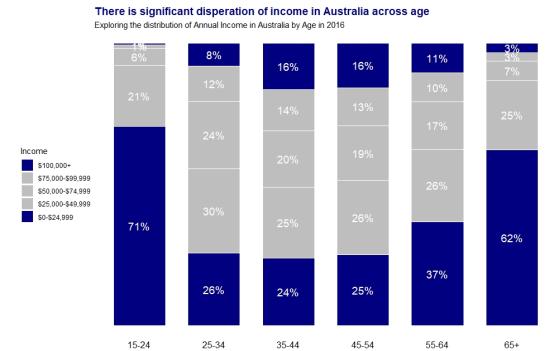
Storytelling with Data Visualisation (3-day)
This master-class has two objectives – to teach the design principles required to make plots that really have an impact on the reader, and to teach the practical skills required to create these plots within the R software package.
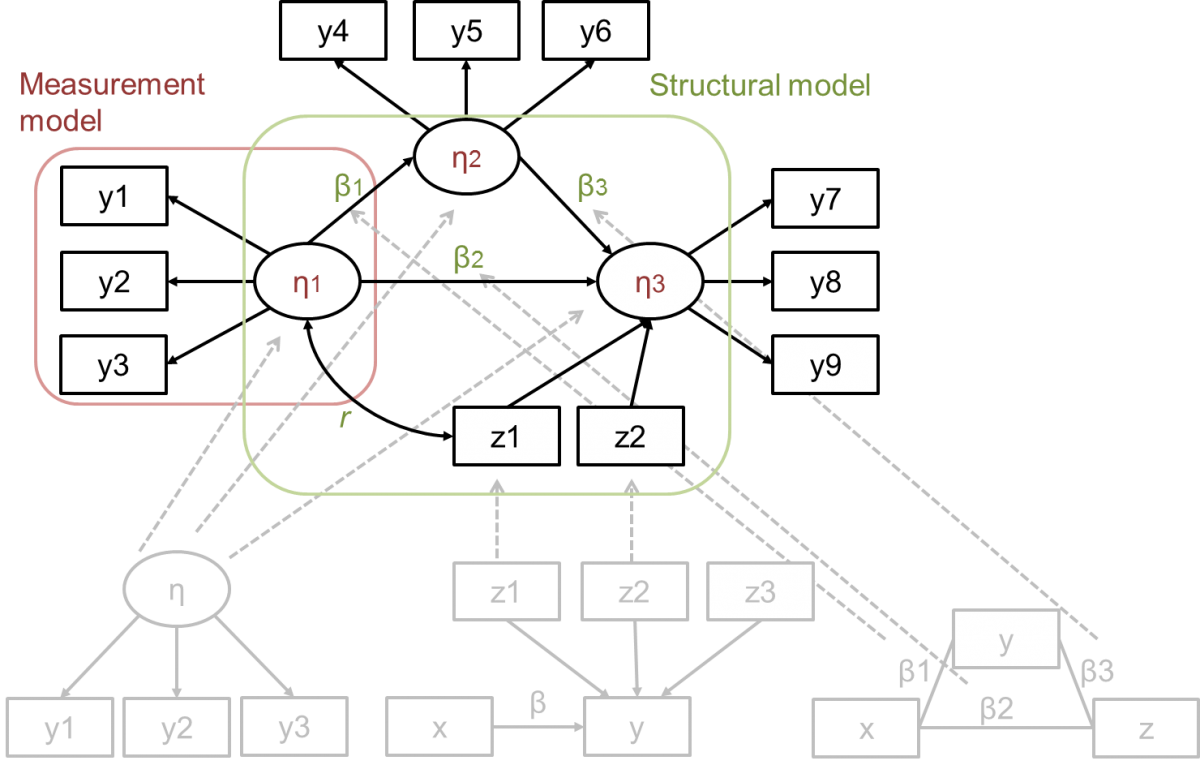
Advanced Structural Equation Modelling
This course is designed as an advanced course in Structural Equation Modeling (SEM) for existing AMOS and/or Mplus users.
Structural Equation Modelling (SEM) Fundamentals (3-day)
This 3-day course is designed to cover the fundamental principles of Structural Equation Modeling (SEM) and introduce the AMOS and/or Mplus software packages to estimate structural equation models.
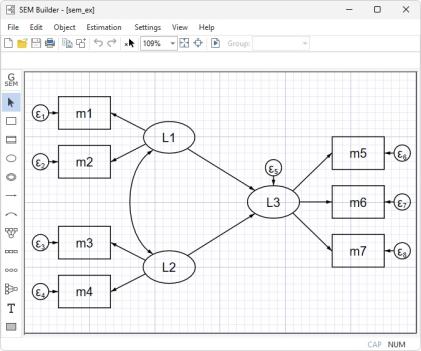
Structural Equation Modelling using Stata (2-day)
Designed as an applied introduction to SEM using Stata, this course aims to provide participants with a sound understanding of when to use SEM and how to assess and report their models.
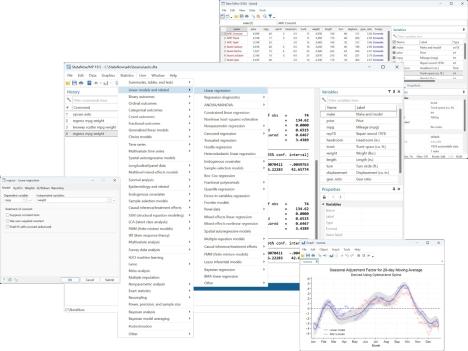
Data Analysis Using Stata
This 5-day course aims to provide you with the understanding and experience to undertake a basic research project in the social or health sciences using Stata as the statistical tool.

Applied Longitudinal Data Analysis
This course provides an overview of Longitudinal Data Analysis. As well as the statistical theory, an overview of the many applications and capabilities of LDA is given.
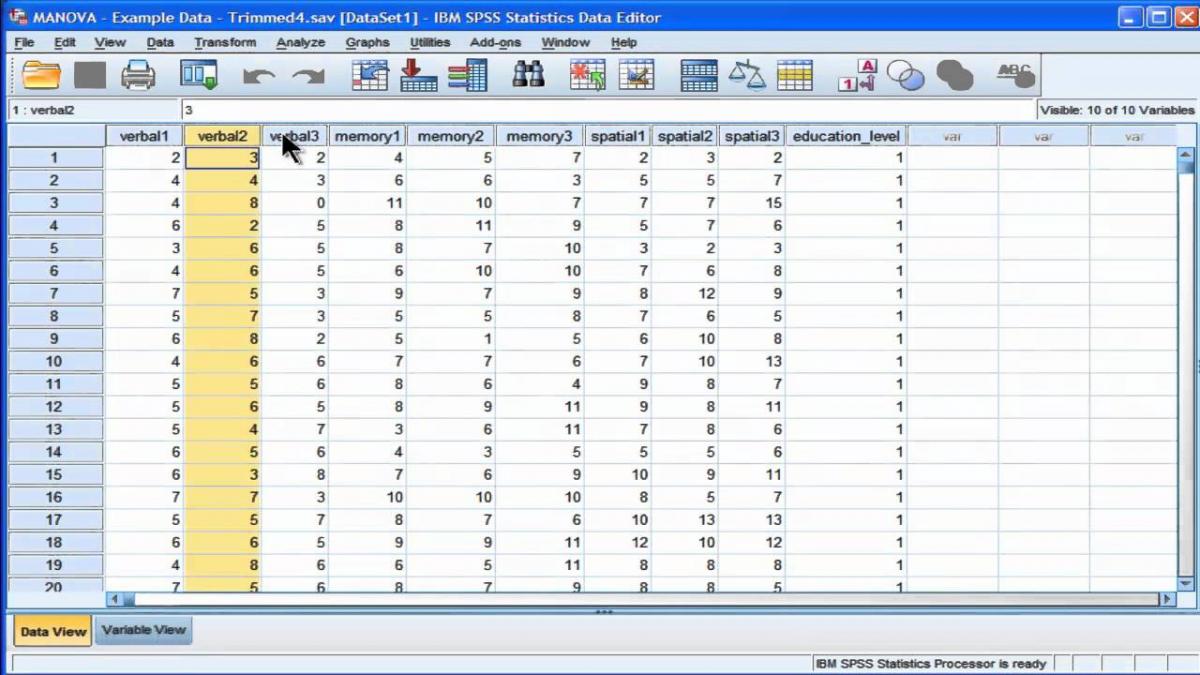
Multivariate Analysis of Variance (MANOVA) (2-day)
Multivariate analysis of variance (MANOVA) is an extension of analysis of variance (ANOVA) to deal with two or more continuous outcomes or dependent variables. This technique is used to determine whether multiple levels of independent variables on their own or in combination with one another have an effect on the outcome variables.

Applied Statistical Procedures
This 5-day intermediate course will help you choose from a range of statistical procedures to analyse your data. It aims to provide participants with an ability to understand, run and interpret these procedures.
Fundamentals of Choice Modelling
This masterclass introduces students to choice models, discusses and contrasts the family of available model structures, and covers both estimation on data and the use of models to produce outputs for policy.
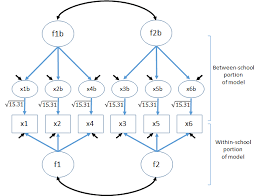
Multi-level Analysis using Mplus
An introduction to the concepts and techniques required to analyse data that is multi-level in nature. (That is, data that is derived from subjects who are nested within groups or data that involves repeated measures that are nested within subjects).
Advanced Statistical Analysis Using R
The focus of this course is on learning advanced statistical methods using R.

Introduction to Survival Analysis (2-day)
Survival analysis is used to find out the time it takes for an event of interest to occur (e.g., death, birth, recidivism). This course is designed as an introduction to survival analysis.

Seriously Applied Regression Analysis (3-day)
Multiple regression is a statistical workhorse of the social sciences. This three-day short course is designed for participants who want to strengthen their understanding of regression analysis and apply it confidently in academic research.
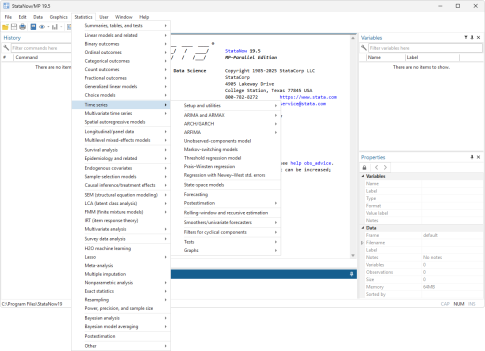
Introduction to Time-Series Analysis using Stata (2-day)
This course is an introduction to time-series concepts and univariate time-series analysis. This course takes a practical applied approach (rather than mathematical), in running basic time-series analysis using Stata.

Introduction to Python for Social Sciences (2-day)
A step-by-step, interactive introduction to Python for participants with no experience with this software package.
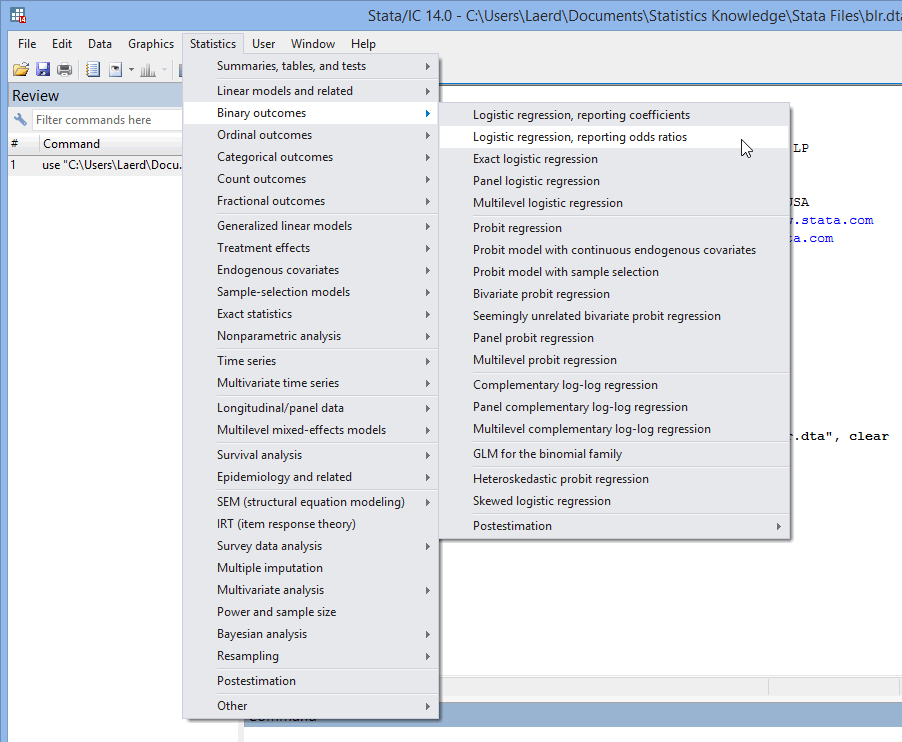
Applied Multivariable Statistical Analysis (3-day)

Applied Choice Modelling using Apollo (2-day)
A hands-on introduction to applied choice modelling using the open-source Apollo software for the estimation of choice models.

Introduction to R (3-day)
This masterclass offers a step-by-step, interactive introduction to R and RStudio for participants with no experience with these software packages.