A practical introduction to the network perspective and social network analysis (SNA), with a focus on applications in political analysis.
Instructor

Prof. Robert Ackland is based in the School of Sociology at the Australian National University (ANU). He was awarded his PhD in economics from the ANU in 2001, and he has been researching online social and organisational networks since 2002. He leads the Virtual Observatory for the Study of Online Networks Lab (http://vosonlab.net) which was established in 2005 and is advancing the social science of the Internet by conducting research, developing research tools, and providing research training. Robert has been teaching masters courses in online research methods and the social science of the internet since 2008 (undergraduate versions of the courses started in 2017). His book Web Social Science: Concepts, Data and Tools for Social Scientists in the Digital Age (SAGE) was published in July 2013. He created the VOSON software for hyperlink network construction and analysis, which was publicly released in 2006. The VOSON R packages for collecting and analysing social media network and text data were released in 2015 (Bryan Gertzel is the lead developer), and to date the packages have been downloaded over 87K times. Robert's book Web Social Science: Concepts, Data and Tools for Social Scientists in the Digital Age (Sage) was published in 2013, and he is currently working on a book manuscript for Edward Elgar Publishing titled Understanding Social Networks and Computational Social Science.
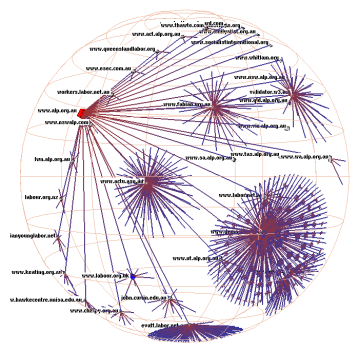
The “network perspective” puts emphasis on social ties between actors, rather than individual characteristics, in understanding behaviour and outcomes. This course provides a practical introduction to the network perspective and social network analysis (SNA).
Participants will gain practical experience in social network analysis in R, using the two main packages for SNA: igraph and statnet.
Topics include:
- constructing, manipulating and visualising networks;
- calculating node-level metrics (e.g. indegree centrality) and network-level metrics (e.g. centralisation),
- Clustering/partitioning networks
- Introduction to statistical SNA - 1: Exponential Random Graph Models (ERGM) provide a statistical inferential framework for modelling interdependencies in social tie formation and allows the testing of whether, for example, a given network exhibits statistically significant homophily, reciprocity, transitivity etc.
- Introduction to statistical SNA - 2: Quadratic Assignment Procedure (QAP) is used to test whether the correlation between two networks is statistically significant, for example: in an organisation, is it the case that people who share advice about work are more likely to also be friends?
It is highly recommended that participants have prior experience in using R. It is also recommended that participants are familiar with basic concepts in SNA.
This course is presented as part of the ANU Online Summer School in Political Analysis
Image

|
Day 1:
Introduction to SNA in igraph: constructing, manipulating and visualising networks; node- and network-level metrics.
Day 2:
SNA in igraph continued: network clustering. Introduction to SNA in statnet.
Day 3:
Introduction to statistical network modelling with ERGMs (via statnet).
Day 4:
ERGMs continued: Model diagnostics (assessing model convergence and degeneracy), goodness-of-fit; Introduction to QAP.
Day 5:
Additional topics based on participant interests (this may include material from Ackland’s ACSPRI course: Computational Social Science: From Social Networks to Simulating Societies
This course will be run in one session per day running over over 5 days.
The course hours are 1.00pm - 3.30pm each day
This course is being held online via Zoom and run on Australian Eastern Daylight Time (GMT +11)
It is highly recommended that participants have prior experience in using R.
It is also recommended that participants are familiar with basic concepts in SNA.
To be confirmed