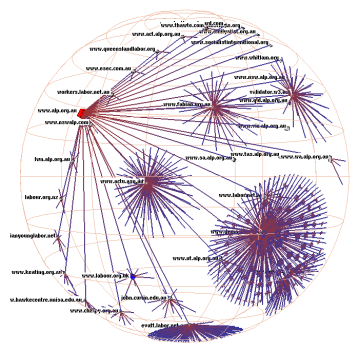
Social Network Analysis in R
A practical introduction to the network perspective and social network analysis (SNA), with a focus on applications in political analysis.

Survey Experiments for Political Science
This course covers the foundations of designing, implementing and analysing basic online survey experiments in political science.

Meaning in Politics: an Introduction to Interpretive Methods
The aim of this course is to introduce and build capacity for Interpretivist Methods in Political Science.

Foundations of Statistical Analysis in Political Analysis
The aim of this course is to provide students with an accessible introduction to the fundamentals of quantitative political science research.

Political Survey Design
This course introduces the principles of survey design and standard practices in the field, with particular emphasis on measuring political attitudes, public opinion and electoral behaviour.

Oral History, Ethnography and Archival Analysis in Political Science
This course introduces core qualitative methods for political science, teaching how researchers collect and interpret unstructured evidence through immersive and interpretive approaches. It is structured around 3 types of qualitative data and the methods for collecting them: oral history, political ethnography and qualitative archival analysis.

Introduction to Critical Discourse Analysis in Political Science
The aim of this course is to introduce students to the foundations of Critical Discourse Analysis and specifically the Fairclough method.

Foundations of Programming in R for Political Analysis in the Age of AI
This course offers hands-on training in R programming for quantitative political analysis, paired with practical and responsible techniques for using AI assistants to write, debug, and verify data analysis code.