This course introduces core qualitative methods for political science, teaching how researchers collect and interpret unstructured evidence through immersive and interpretive approaches. It is structured around 3 types of qualitative data and the methods for collecting them: oral history, political ethnography and qualitative archival analysis.
Instructor
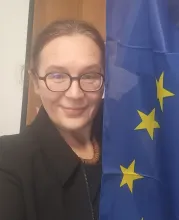
Dr Katarzyna Williams is Deputy Director at the ANU Centre for European Studies, The Australian National University, working at the intersection of migration, memory studies and international relations. Her research examines how cultural practice does identity work, particularly how narrative, memory and heritage shape belonging in contexts of displacement and transnational mobility. She is a qualitative researcher using oral history, life narratives and memory analysis, and has conducted extended fieldwork with migrant and diaspora communities in Australia and Europe.

This course introduces core qualitative methods for political science, teaching how researchers collect and interpret unstructured evidence through immersive and interpretive approaches. It is structured around three types of qualitative data and the methods for collecting them: oral history, political ethnography and qualitative archival analysis (introduction). This combination is modelled on landmark works of ethnographic political science, including Scott, Wedeen, Wood and Cramer, which triangulate oral testimony, observational and documentary evidence to strengthen interpretive and causal inference. Survey and experimental research necessarily relies on what actors report, immersive and interpretive methods complement this by examining political life as it is practised: how power operates in everyday settings, how activists organise or how events are remembered and instrumentalised. The course is intended for those with no or limited experience with qualitative methods.
Participants will conduct, record and transcribe an oral history interview and learn to interpret testimony, treating memory, narrative, and silence as data; they will carry out a supported observation exercise in a political setting, converting jottings into fieldnotes; and they will work with archived testimony and institutional records, evaluating sources and reading them against oral and observational accounts. Memory politics will serve as one of the analytical themes.
Main Topics Covered
- Foundations: the logic of interpretive inquiry in political science; designing qualitative research; access, positionality, ethics in sensitive political settings
- Oral history (verbal data): distinctive craft of oral history interviews; oral history formats for political science; recording, transcription and archiving; memory as data; silences, evasions and narrative form as evidence; analysing archived political testimony
- Political ethnography (behavioural data): participant observation in political settings; interpreting political settings; from jottings to fieldnotes
- Archival analysis (documentary data): archives as artefacts; source criticism for political records; triangulating documents, testimony and observation
- Analysis and writing up: qualitative coding (NVivo); building claims from qualitative evidence; writing for academic venues
Learning Objectives
By the end of the course, participants will be able to:
- explain what qualitative, immersive and interpretive methods contribute to political science research;
- produce an initial design for a qualitative political research project and identify appropriate data types for it;
- practise the basics of conducting and recording an oral history interview;
- apply selected tools for interpreting testimony to short interview transcripts and archival material;
- carry out a short independent participant observation exercise in a political setting, and convert jottings into basic fieldnotes;
- recognise the uses and limits of archival sources and how they triangulate with oral and observational evidence;
- begin coding a small qualitative corpus in NVivo
This course is presented as part of the ANU Online Summer School in Political Analysis
Image

|
Day 1: Foundations and Design – why immersion?
Topics
- What immersive and interpretive methods contribute to political science: studying power in practice; hidden transcripts; concept formation; mechanisms and meaning
- The interpretive turn in political science: brief history (Fenno's soak-and-poke; the Perestroika debate; the rise of political ethnography and testimony-based research)
- Research design: questions suited to immersive/testimonial methods; site, case, narrator selection; feasibility
- Access, gatekeepers and rapport in political settings
- Researcher’s positionality, ethics and risks: institutional review, informed consent in politically sensitive contexts, researcher and participant safety, data security
- In-class workshop: participants map their own project onto a design template (question > sites/narrators > access plan > ethical risks), in small-group (breakout rooms) with peer/instructor feedback
Readings
- Schatz, E. (2009). "Ethnographic Immersion and the Study of Politics." Introduction to Schatz (ed.), Political Ethnography: What Immersion Contributes to the Study of Power. University of Chicago Press.
- Wedeen, L. (2010). "Reflections on Ethnographic Work in Political Science." Annual Review of Political Science 13: 255–272.
- Recommended: Scott JC. (1990), Domination and the Arts of Resistance, Yale University Press, ch. 1 ('Behind the Official Story').
- Handout: one-page primer on the interpretive turn in political science; positivist vs interpretivist standards of evidence
Homework
- Revise your one-page project design from the workshop, incorporating peer feedback
Day 2: Oral History
Topics
- What oral history is and how it differs from a standard semi-structured interview: life-history structure, shared authority
- Formats in political research: elite oral history, political life histories, testimonial accounts of violence and displacement
- Question craft: openings, chronological scaffolds, probes, managing bias and power imbalances; Fujii’s relational approach; interviewing online, rapport, silence and lag without co-presence
- Recording, transcription, consent and archiving workflow
- Data (incl. memory and testimony) and meta-data (silences, evasions, denials); narrative analysis
- In-class activity 1: The instructor provides a 2-page printed transcript of an interview with a political actor. In pairs, participants colour-code the transcript (contradictions, personal justification, pauses, deflections, etc.). Groups discuss their findings.
- In-class activity 2: In pairs in breakout rooms, participants conduct and record a 15min oral history with each other on a political-biographical topic. Debrief: what the interviewer’s choices did to the narrative; listening back to yourself.
Readings
- Fujii, L. A. (2018), Interviewing in Social Science Research: A Relational Approach. Routledge, chs 1–2.
- Thomson, S. (2010), "Getting Close to Rwandans since the Genocide: Studying Everyday Life in Highly Politicized Research Setting," African Studies Review 53(3), pp. 19-34.
- Recommended: Ritchie, D. (2015). Doing Oral History, 3rd ed. Oxford University Press, ch. 3
Homework
- Listen back to your full recording and note two moments where you would now ask differently; transcribe a 3–5 minute excerpt with tools provided (you will analyse this transcript on Day 4)
- Draft an interview guide (1 page) for your own project’s first oral history interview, applying the day's question-craft principles.
Day 3: Political Ethnography
Topics:
- Observational stances: the observer–participant continuum; overt vs covert roles in political research
- What to attend to in political settings: documenting thick descriptions of daily political behaviour, space and informal interactions (talk, hierarchy, front-stage/back-stage); observer's effect
- The mechanics of jottings & headnotes; turning jottings into full fieldnotes
- Worked examples from Fenno's Home Style appendix and Pachirat on observational attention
- In-class activity: all participants take jottings on the same recorded footage of a real political setting, then compare in breakout groups; positionality in practice; observing mediated vs in-room politics
Readings
- Emerson, R., Fretz, R. & Shaw, L. (2011). Writing Ethnographic Fieldnotes, 2nd ed. University of Chicago Press, chs 1–3
- Fenno, R. (1978), Home Style: House Members in Their Districts (methods appendix). Little, Brown.
- Recommended: Pachirat, T. (2009). "The Political in Political Ethnography: dispatches from the kill floor." In Schatz (ed.), Political Ethnography: What Immersion Contributes to the Study of Power Chicago: Univ. Chicago Press, pp.143–61.
Homework
- Independent observation: watch 30–45 minutes of a livestreamed or recorded public political proceeding (links provided) and write up one page of fieldnotes the same day
Day 4: Interpreting Testimony and Documents
Topics
- Memory is not a recording; constructive recall, retrospective reinterpretation, why "inaccuracy" is evidence; Portelli's misremembered political killing
- Reading testimony analytically: narrative structure and devices; Fujii's "meta-data" (rumours, evasions, denials, and silences as evidence)
- Collective memory and memory politics; official vs vernacular memory; commemoration and contested pasts as objects of political research
- Source criticism for political records and introduction to archival analysis: the archive as institution; provenance and institutional bias; what official records cannot reveal
- Triangulation: oral accounts against documents, observation and other narrators; interpreting conflicts between sources
- In-class activity: guided close reading of testimony excerpts from a truth-commission archive (e.g., South African TRC transcripts), applying the day's analytic tools
Readings
- Portelli, A. (1991). “The Death of Luigi Trastulli: Memory and the Event.” In The Death of Luigi Trastulli and Other Stories: Form and Meaning in Oral History. SUNY Press
- Fujii, L. A. (2010). "Shades of Truth and Lies: Interpreting Testimonies of War and Violence." Journal of Peace Research 47(2): 231-241.
- Recommended: Jelin, E. (2003), State Repression and the Labors of Memory, University of Minnesota Press, ch. 1; Koposov N. (2017). Memory Laws, Memory Wars: The Politics of the Past in Europe and Russia. Cambridge University Press, introduction.
Homework
- Using the worksheet, apply two of the narrative tools to your own Day 2 transcript (half a page)
- Draft an analytic memo based on in-class activity
Day 5: Combining Data, Coding, and Writing Up
Topics
- Debrief of the Day 4 take-home analysis: what participants found in their own testimony
- Working with NVivo: managing a corpus (files, metadata, data security); importing transcripts and fieldnotes; open and focused coding; memos
- From codes to claims: analytic memoing, developing concepts from testimony, interpretive validity; answering the "small-n/generalisability" objection
- Combining testimony, observation and documents (worked examples: Wood's El Salvador research; Cramer's "method of listening")
- Writing up: structure, quoting testimony ethically, anonymisation and narrator review
- Capstone workshop: breakout groups of 3–4; each participant presents their one-page project design for structured peer and instructor feedback
- Course wrap-up: further reading, ethics applications, archiving and reuse of oral history collections, further training pathways
Readings
- Wood, E. J. (2003). Insurgent Collective Action and Civil War in El Salvador (methods appendix). Cambridge University Press.
- Cramer, K. (2016). The Politics of Resentment. University of Chicago Press (ch. 2).
- Recommended: Soss J. (2021). On Casing a Study versus Studying a Case. In: Simmons ES, Rush Smith N, eds. Rethinking Comparison: Innovative Methods for Qualitative Political Inquiry. Cambridge University Press: 84-106.
Homework (optional)
- Suggested next steps: consult the further-reading list (distributed Day 5) and relevant follow-on ACSPRI offerings
This course will be run in one session per day running over over 5 days.
The course hours are 1.00pm - 3.30pm each day
This course is being held online via Zoom and run on Australian Eastern Daylight Time (GMT +11)
All course materials, including slides and lecture notes, will be provided via the course platform.
Software Requirements:
- NVivo trial installed in advance; installation guide provided;
- a headset or microphone for online sessions;
- a smartphone or audio recorder for recording interview.
This is a non-graded professional development course. Active participation is expected, including:
- Completion of daily homework assignments
- Participation in class discussions and in-class activities