
Structural equation modelling—or structural equations with latent variables—is a very general statistical model and widely used method. For example, SEM is used in fundamental disciplines such as the social, economic and psychological sciences, the biological sciences, and applied disciplines such as education, health and marketing.
This course provides an overview of the fundamentals of SEM. As well as the statistical theory, an overview of the many applications and capabilities of SEM is given. The course is not particularly mathematical, but instead places emphasis on the fundamental concepts of SEM and how it is used by applied researchers.
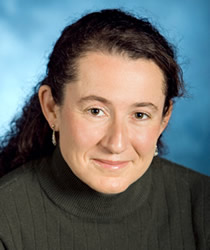
Helen M. G. Watt is Professor of Educational Psychology, and Director of Research Development (Social Sciences) at The University of Sydney. Previously she served on the Faculties of Monash University, the University of Michigan, University of Western Sydney, University of Sydney, and Macquarie University. Her interests include motivation, educational and occupational choices, and quantitative analyses for developmental data. Her current research has implications for redressing the gender imbalance in mathematics- and science-related careers, and supporting career development for beginning teachers. Helen is Coordinator of the Network Gender & STEM (www.genderandSTEM.com), Associate Editor for Social Psychology of Education, and has served on the Editorial Boards for Contemporary Educational Psychology, the Journal of Research on Adolescence; Equity, Diversity and Inclusion; Journal of Experimental Education; Equal Opportunities International; and the Australian Journal of Education. She has attracted research awards and external funding, held elected leadership roles in international and national associations, and co-edited recent books and journal special issues including Global Perspectives on Teacher Motivation (2017); Gender and Occupational Outcomes (2008); Understanding Women’s Choice of Mathematics- and Science-Related Careers (2006); Motivation for Teaching (2008); and Teaching Motivations in Different Countries (2012). Website: http://sydney.edu.au/education_social_work/about/staff/profiles/helen.watt.php
SEM has become popular for several reasons, apart from its generality:
(i) all SEM models can be represented visually,
(ii) a standard notation helps researchers to communicate, and
(iii) several software packages for estimating SEM models are readily available (e.g., Amos, LISREL, Mplus, R).
This course provides an overview of the fundamentals of SEM. As well as the statistical theory, an overview of the many applications and capabilities of SEM is given. The course is not particularly mathematical, but instead places emphasis on the fundamental concepts of SEM and how it is used by applied researchers.
General aims of the course are for students to develop a readiness for using SEM software and to develop the requisite knowledge for applying SEM methods and models in an intelligent way. Note that participants may be invited to briefly present their own research on the last day of class. This exercise, along with the formal lecture material, might help participants to chart a direction forward in their study and application of SEM.
This classroom based course consists of seven parts.
1. A brief history of SEM, including its antecedents (e.g., factor analysis and regression).
2. The fundamental concepts of SEM. This includes the use of path diagrams, the notation that is used to specify SEM models, estimation and identification of SEM models, the assessment of SEM models, the interpretation of parameter estimates and the respecification of models.
3. The specification, estimation and interpretation of common SEM models, including confirmatory factor analysis models and ‘causal’ models with latent variables (i.e., full generalised SEM models).
4. Applications of SEM models (e.g., tests of mediation and moderation, common method and multitrait-multimethod models).
5. Extensions of the basic SEM model (e.g., multisample analysis and multilevel modelling).
6. A demonstration of the software packages (Amos, LISREL).
7. How to write up results from SEM analyses.
This course will take place in a combination of classroom and computer lab. Participants are also welcome to bring their own laptops.
Participants must have completed the course Fundamentals of Multiple Regression or an equivalent course at university level and/or have equivalent experience. Familiarity with analysis of variance, factor analysis or regression is desirable, but not strictly necessary. It is assumed that participants have little or no familiarity of structural equations with latent variables.
General Reading:
- Bollen, Kenneth A. (1989). Structural Equations with Latent Variables. New York: John Wiley & Sons.
- Kline, Rex B. (2005). Principles and Practice of Structural Equation Modeling. (2nd Ed.). New York: Guilford Press.
- Schumacker, Randall & Lomax, Richard. (2004). A Beginner's Guide to Structural Equation Modeling. (2nd Ed.). Mahwah, N.J.: Lawrence Erlbaum Associates.
Great introduction to SEM and to a couple of the software packages to use, now understand how SEM can be used and how to go about the process. (Summer 2015)
One on one discussion with participants using own data is helpful as you are applying what you have learnt to your own data. (Summer 2015)
The fundamentals and ground work covered was exeptionally useful. I feel I now have a very solid understanding of regression, path analysis and SEM. (Summer 2015)
Great to learn the theory and then consolidate it with practical activities. (Winter 2015)
The structure of smaller lectures was great. This content then scaffolded computer activities. (Winter 2015)
The instructor's bound, book length course notes will serve as the course texts.